
Practical Training: How Real Practical Training Bridges The Gap Between Education And Industry Jobs
Introduction
In today's fast-evolving global economy, the traditional education model—heavily reliant on rote memorization and theoretical lectures—faces a monumental challenge. Employers across manufacturing, IT, construction, and technical services repeatedly highlight a critical skills gap: fresh graduates possess academic credentials but often lack the hands-on competencies required on day one of the job.
To solve this mismatch, vocational training and technical education systems have pivoted toward a model centered around experiential learning. At Nobel Centre for Vocational & Technology Education (NCVTE), practical training is not merely an add-on; it is the cornerstone of our educational philosophy. This comprehensive blog explores how real practical training bridges the classroom-to-industry divide, empowering youth with authentic, employable skills.
1. The Core Flaw in Traditional Education
For decades, higher education focused heavily on theoretical frameworks, exams, and textbook concepts. While theory provides a foundational understanding, it fails to replicate the dynamic, unpredictable environment of a real-world workplace.
-
The Theory-Practice Divide: A student may understand the physics behind electrical circuits on paper, but troubleshooting a live industrial panel requires tactile familiarity, safety protocol awareness, and real-time problem-solving.
-
Employer Expectations: Modern industries cannot afford prolonged training periods for fresh hires. Companies look for candidates who understand tools, machinery, software, and safety standards right from the start.
2. What is Real Practical Training?
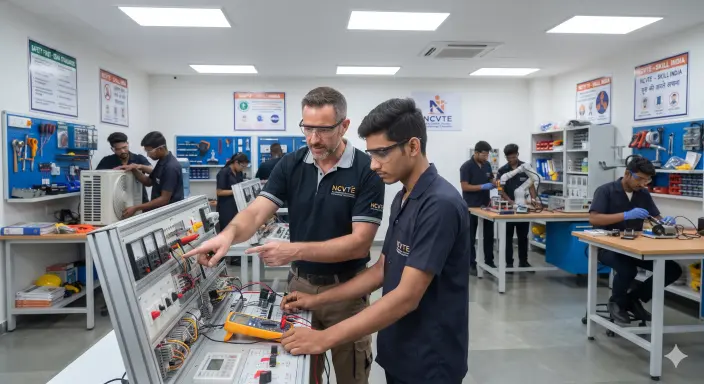
Practical training involves active, hands-on engagement where learners apply theoretical concepts to real-world machinery, scenarios, and tools. Unlike simulated demos, authentic vocational training mirrors actual industrial environments.
-
Workshop Integration: Students handle real equipment—ranging from HVAC systems and mobile hardware to industrial safety gear and computer programming environments.
-
Guided Mentorship: Experienced instructors oversee student practice, correcting mistakes, instilling safety habits, and teaching industry best practices.
3. How Practical Training Bridges the Gap
Integrating intensive practical sessions into vocational curricula transforms raw learners into industry-ready professionals through several key mechanisms:
-
Developing Muscle Memory and Technical Fluency: Technical skills require physical dexterity. Whether it is soldering a microchip, configuring a network router, or executing safety audits, doing it repeatedly builds confidence and precision.
-
Cultivating Real-Time Problem-Solving: Textbooks offer neat, structured problems with single answers. Real industries present complex anomalies—malfunctioning machines, unexpected errors, or safety hazards. Practical training trains students to analyze unexpected variables and troubleshoot efficiently.
-
Inculcating Workplace Safety Discipline: In high-risk sectors like industrial safety, construction, and electrical maintenance, adherence to Occupational Health and Safety (OHS) standards is non-negotiable. Practical sessions embed safety habits into daily routines, reducing workplace accidents.
-
Boosting Confidence and Employability: When candidates face technical interview panels or skill tests, hands-on experience allows them to speak with authority about their capabilities. Employers instantly recognize and reward practical competence.
4. The NCVTE Approach to Industry-Aligned Training
At Nobel Centre for Vocational & Technology Education (NCVTE), we recognize that autonomous vocational education must remain closely aligned with market demands.
-
Industry-Relevant Curriculum: Our courses—from Advance Diploma in Industrial Safety (ADIS) to technical repair programs and computer applications—are structured to balance conceptual clarity with extensive workshop hours.
-
Transparent Verification & Credibility: Every skill acquired is backed by genuine, verifiable certification. Students and employers can instantly check credentials through our centralized verification portal at
ncvte.org. -
Empowering Franchise Partners: Our network of affiliated training centers is equipped with standardized practical training frameworks, ensuring that a student studying in Meerut or any other center receives uniform, high-quality skill development.
5. Long-Term Benefits for Students and the Economy
The impact of practical training extends far beyond individual employment:
-
Higher Earning Potential: Skilled technicians and safety officers command better starting salaries and faster career growth compared to purely theoretical graduates.
-
Entrepreneurial Independence: Practical skills enable individuals to launch independent service ventures, from technical repair shops to specialized consultancy services.
-
National Economic Growth: India’s vision of becoming a global skill hub relies on a workforce capable of driving manufacturing, infrastructure, and technical services efficiently.
Conclusion
The bridge between education and employment is built on practice, precision, and performance. By replacing passive learning with active, hands-on technical training, institutions like NCVTE are preparing the youth for tomorrow's industrial challenges.
To explore our diverse vocational courses, verify student credentials, or partner with us for franchise opportunities, visit our official website today at ncvte.org.